2003
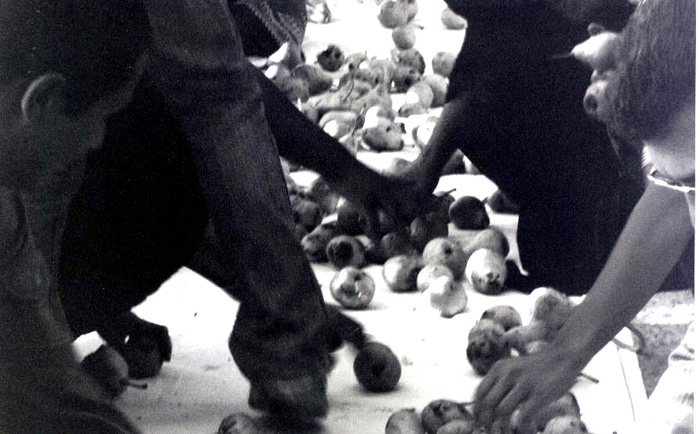
In September 2003, I staged a public performance in Esfahan titled A Performance for a Nazr, A Nazr for a Performance—a gesture of gratitude rooted in personal ritual, but offered as a poetic public act.
Nazr is a traditional vow or offering made in fulfillment of a wish—a private contract between oneself and the divine. After a personal wish of mine came true, I pledged to fulfill it not with the usual food distribution or monetary donation, but through a public performance. I sold a piece of gold—a wedding ring that had lost its meaning—to buy 100 kilos of fresh pears. Seven boxes in total.
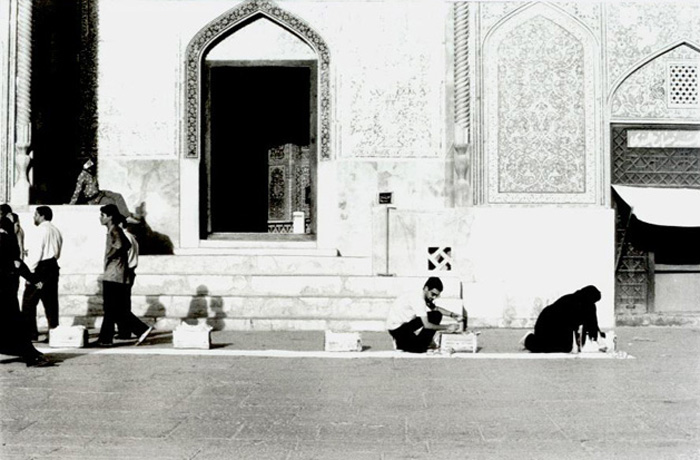
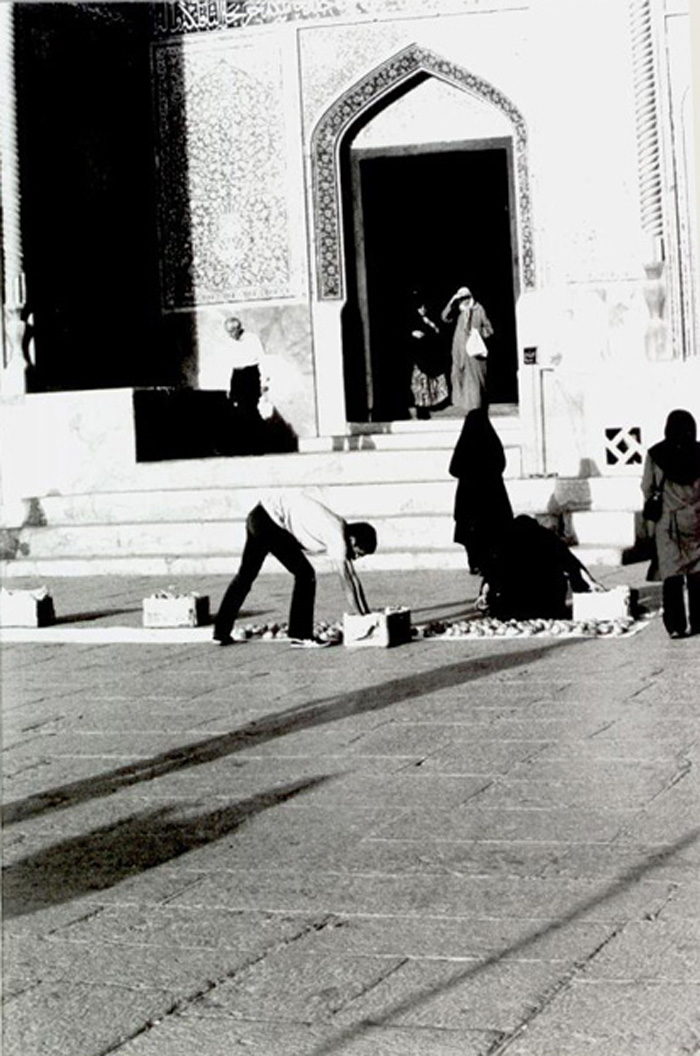
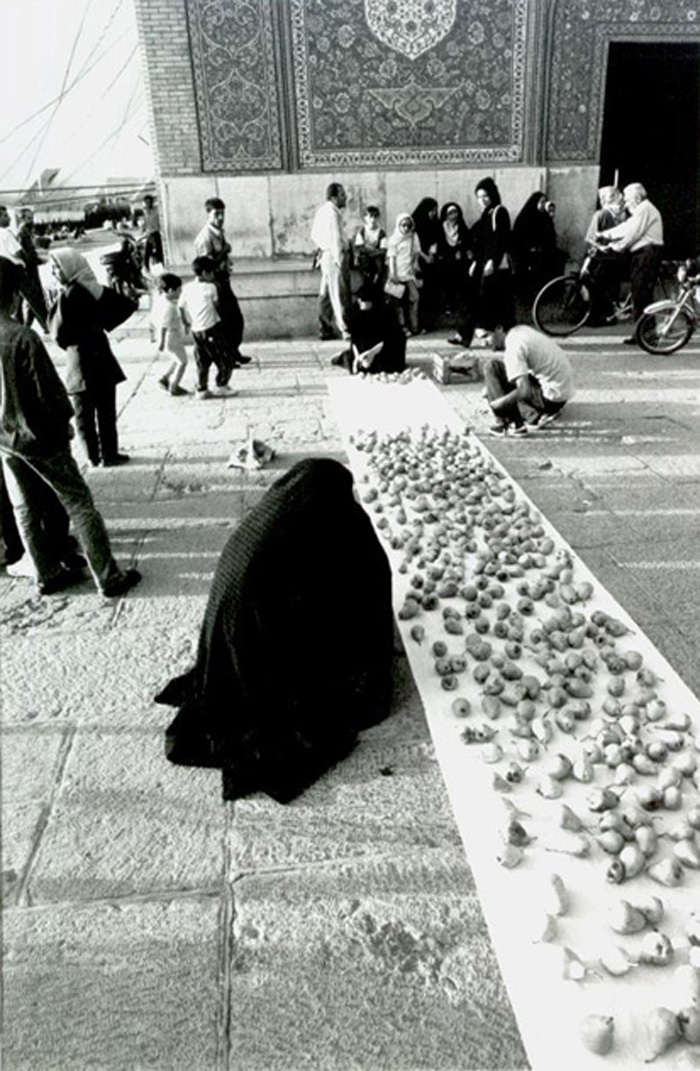
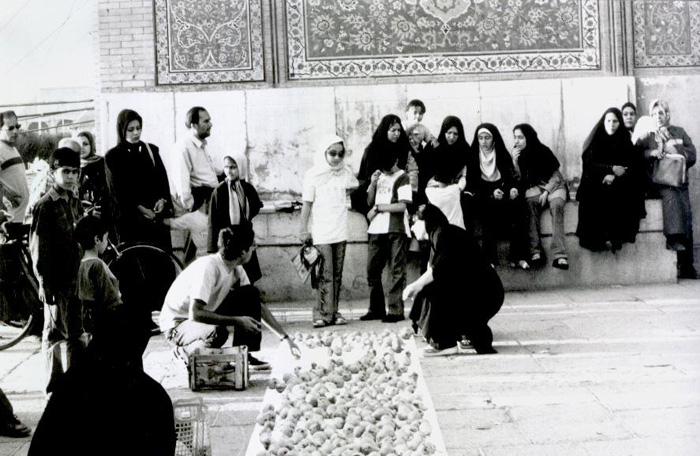
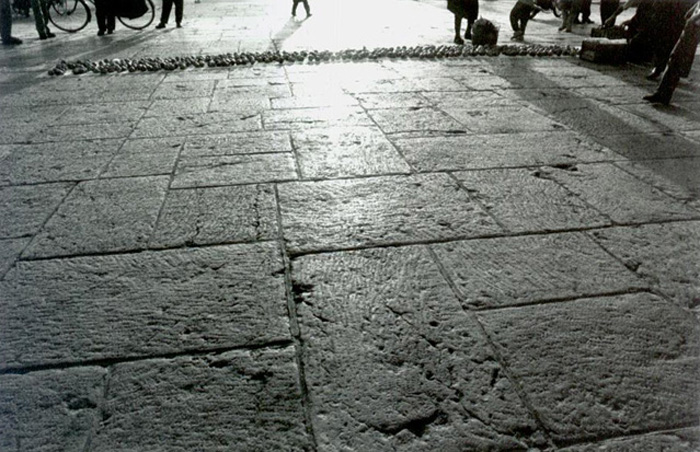
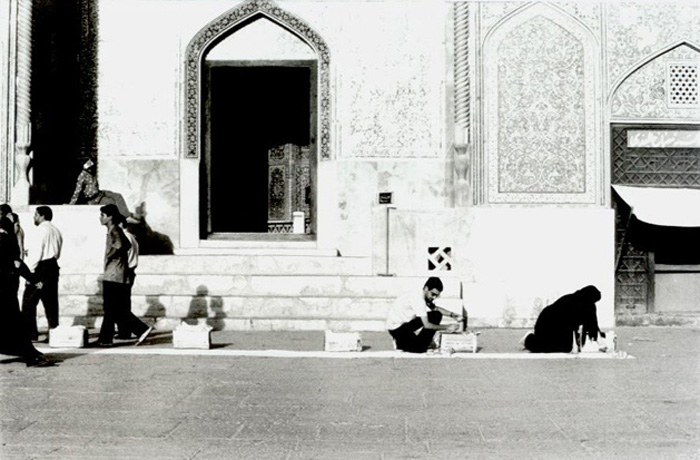
On the afternoon of September 7, I laid a ten-meter cloth in front of Sheikh Lotfollah Mosque in Naqsh-e Jahan Square. This mosque, with no minaret and no call to prayer, was historically reserved for royal women—its discreet beauty and silence made it the perfect place for a gesture shaped by both reverence and quiet rebellion.
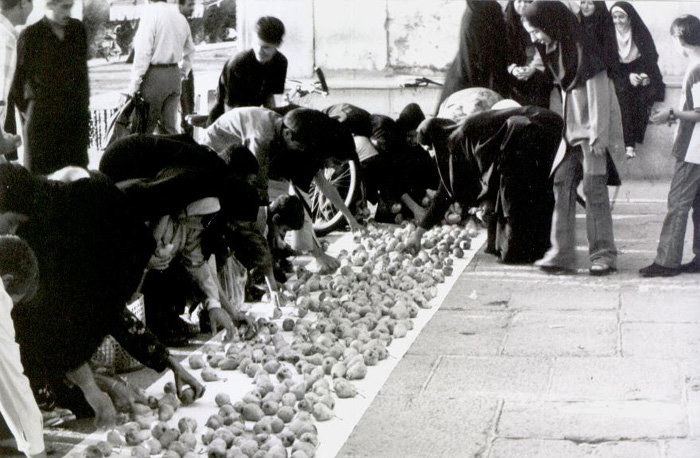
I arranged the pears on the fabric like a feast. At first, people were unsure. Pears were an unusual offering; Nazrs are rarely performed with fruit, and certainly not this way. The public wasn’t certain—was this Nazr? Was it performance? Some asked questions. Some hesitated. But eventually, one by one, they came forward. A pear in a hand, then a bucket, then pockets filled. Every single pear was taken.
As the spread cleared, my role—as artist, as woman, as someone offering something unspeakable—became part of the ritual. I arranged, offered, and responded without explaining. The act existed somewhere between intimacy and exposure, between tradition and reinterpretation.
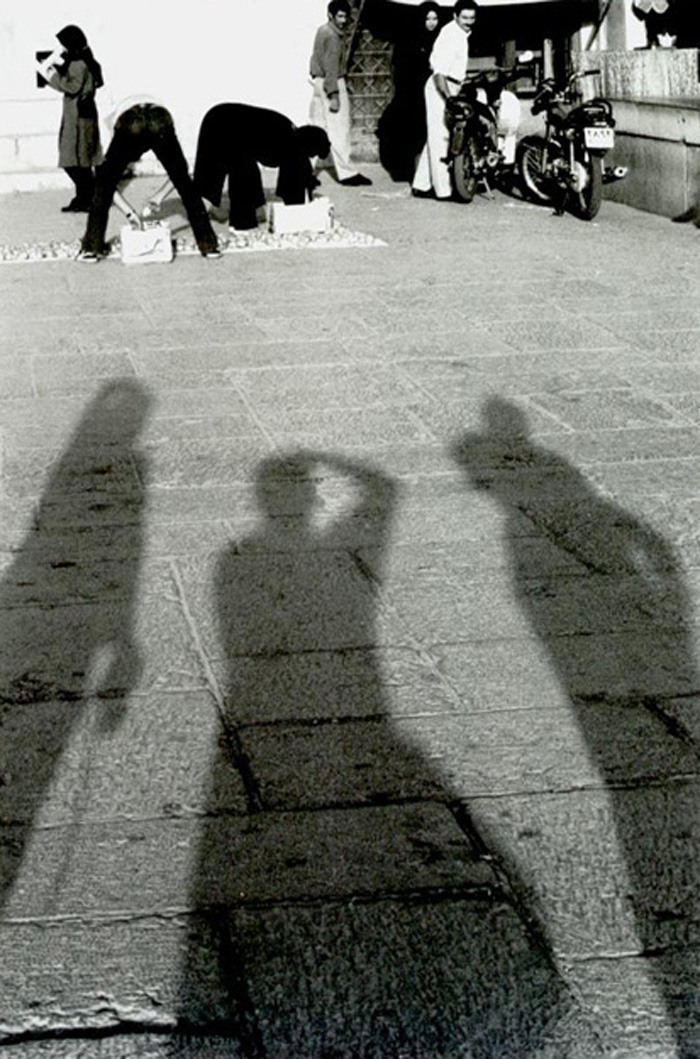
I had asked my friends to document the performance quietly, from a distance. I wanted to avoid disrupting the sense of sincerity—for this was both a real Nazr and a performance. I wanted it to be felt before it was understood.
This was the first in a series of three Nazr performances. The others will take place when their conditions are met. Like many vows, the reason behind them remains private.
Beneath the offering was a deeper intention: to connect ritual with the personal emotional experiences often hidden in women’s lives—to make visible the silent negotiations, sacrifices, and discriminations that shape the private realm, and bring them gently into public space.
A Performance for a Nazr, A Nazr for a Performance” Photo Gallery
 Jinoos Taghizadeh